
Family vacation planning
How to plan a family vacation, together
See a completed family vacation planner example with a flexible itinerary, shared packing and tasks with owners. Plan around the people traveling with you.
Start with the people, then the plans
A family vacation planner is most useful when it answers three questions: what matters to each traveler, who is handling each task, and what happens next. You do not have to fill every page before booking a trip.
This example follows Alex, Sam and two children on a fictional two-night break at Cedar Lake. Everyone wants time by the water, one child wants a playground visit, and the family wants an unhurried afternoon. The place, names and arrangements are fictional. The completed images show actual worksheets from our 20-page Family Vacation Planner - Illustrated Edition; purchased files are blank for your own answers.
Give each traveler a say
Begin with Our family trip on page 4, then repeat One traveler at a time on page 5 for each person who needs a separate profile. Record a top wish, anything they would rather skip, and the food, rest, comfort or access arrangements relevant to this trip. Children can tell an adult what to write.
In this example, the family keeps the morning outing but leaves a rest period after lunch. Unknown details become questions for the accommodation or activity provider. Write down the answer when it is confirmed rather than treating a checked box as proof.
Share the work with a name and a deadline
Use Choices and next actions on page 6 for decisions and unfinished jobs. A task is easier to follow when one person owns the next step and knows when it needs to happen. This is a fictional example of what the three columns could contain.
| Wish / question / task | Decision / next step | Who / due |
|---|---|---|
| Can we arrive before check-in? | Ask our host about bag storage; record the answer. | Sam / Friday |
| Everyone wants a different afternoon | Keep the morning outing; leave the afternoon choice open. | Alex + family / Sunday |
| Shared packing still to do | Check chargers and rain layers, then write quantities and bags. | Alex / day before departure |
Build a flexible family itinerary
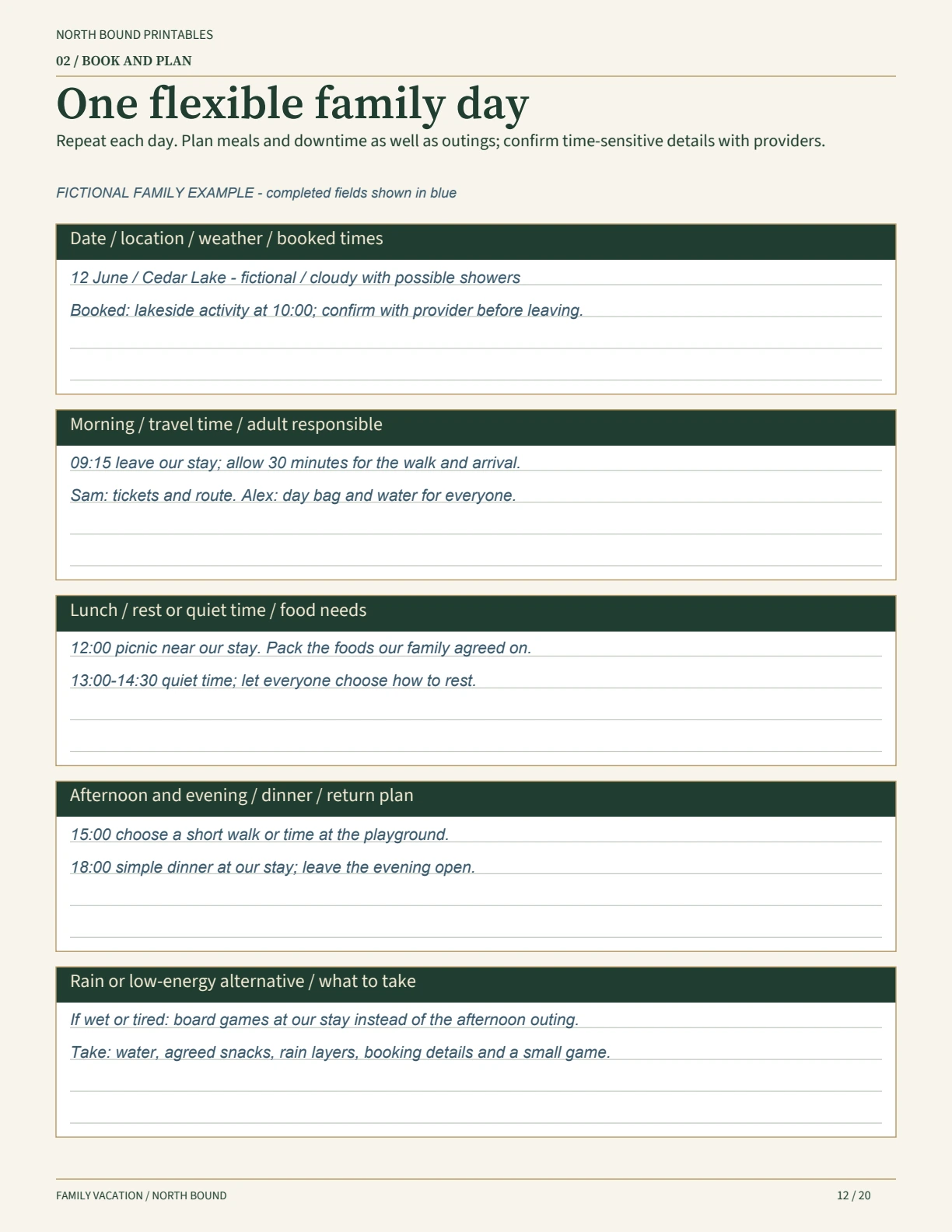
Use The trip at a glance on page 11 for the whole break, then repeat One flexible family day on page 12 when you need more detail. Put fixed bookings in first. Add travel time, meals and rest before choosing more activities.
On the example day, the family leaves at 09:15 for a 10:00 booking, has lunch around noon and rests from 13:00 to 14:30. At 15:00 they choose a short walk or the playground. Dinner is at their stay, and the evening is left open. If it rains or someone is tired, they play a board game instead. The times illustrate the worksheet; they are not a recommended schedule for every family.
Pack personal items once and shared items together
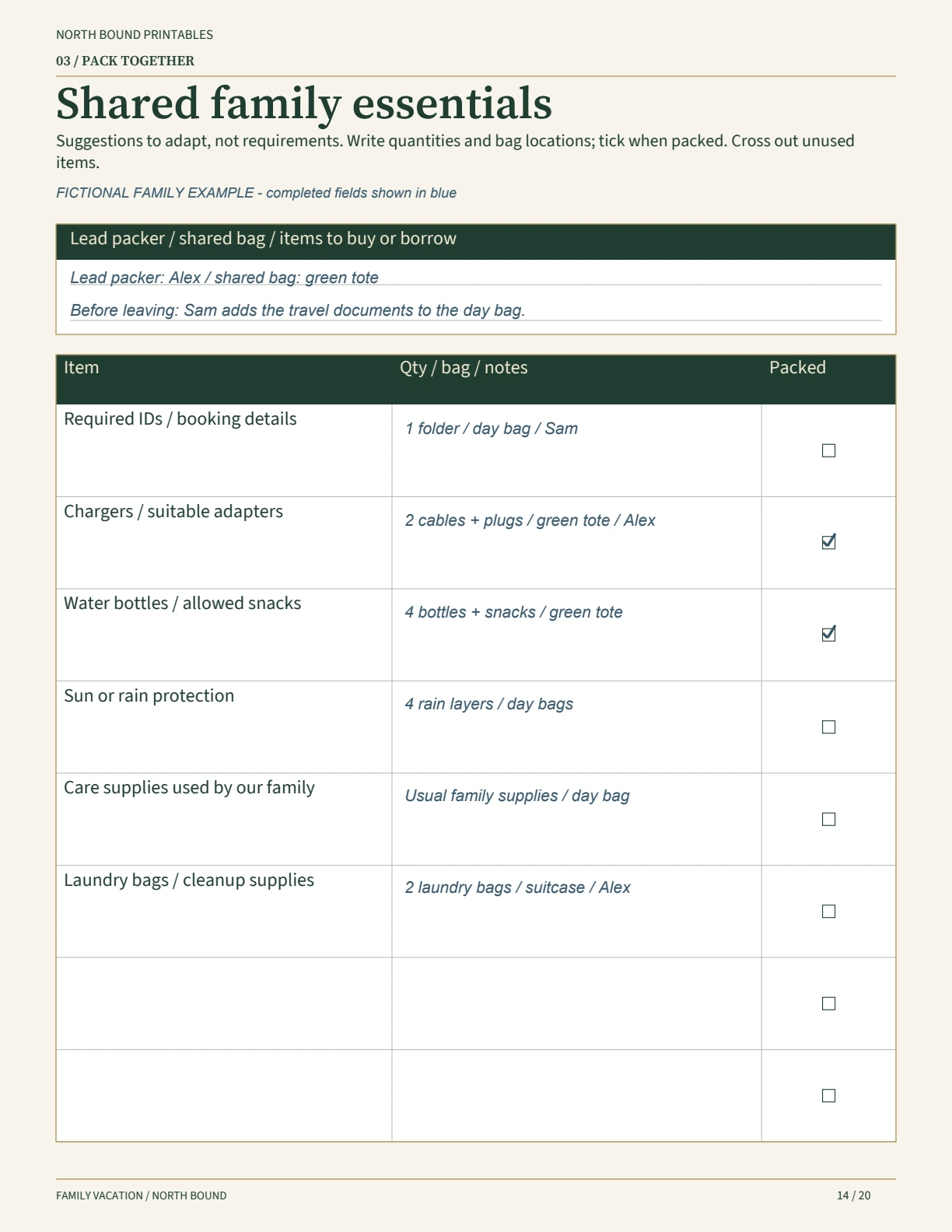
Repeat Pack for one person on page 13 for each traveler. Use Shared family essentials on page 14 for items the group is carrying together, and The travel-day bag on page 15 for things you need to reach on the way.
In the example, Alex is the lead packer. Two charging cables and plugs go in the green tote, along with four water bottles and the agreed snacks. Sam will add the document folder to the day bag later, so that row stays unchecked. Four rain layers and the remaining supplies also stay unchecked until they are packed. Replace suggestions that do not apply to your family and confirm any route restrictions.
Choose the pages your family actually needs
A family trip planner is not a requirement to complete twenty pages for every trip. Print the overview, relevant traveler profiles and a packing sheet first. Add the budget, bookings or daily plan when they help answer a real question. Page 19 is a full lined Miscellaneous items sheet for extra items and reminders.
The Family Vacation Planner - Illustrated Edition is the coordinated 20-page workbook shown here. It is a separate product from our original Family Vacation Planner. Check the title and page previews when comparing editions. A baby and toddler planner focuses on younger travelers; a kids travel journal is for recording the trip rather than managing all the bookings.
Try a simple daily itinerary before choosing a full planner
If you only need a day-by-day schedule, start with our free travel itinerary linked below. It includes a blank daily sheet, a fictional completed example and a lined notes page in US Letter and A4. No email address is needed.
The full illustrated family planner adds traveler needs, shared decisions, budgeting, bookings and three prefilled packing sheets. It includes the same 20 pages in US Letter, A4 and A5 for personal use. The PDFs are designed for handwriting; they are not fillable forms or editable templates. Purchases and delivery take place on Etsy.
More useful trip resources
Put the guide into practice
Related printable planners
Family & Kids
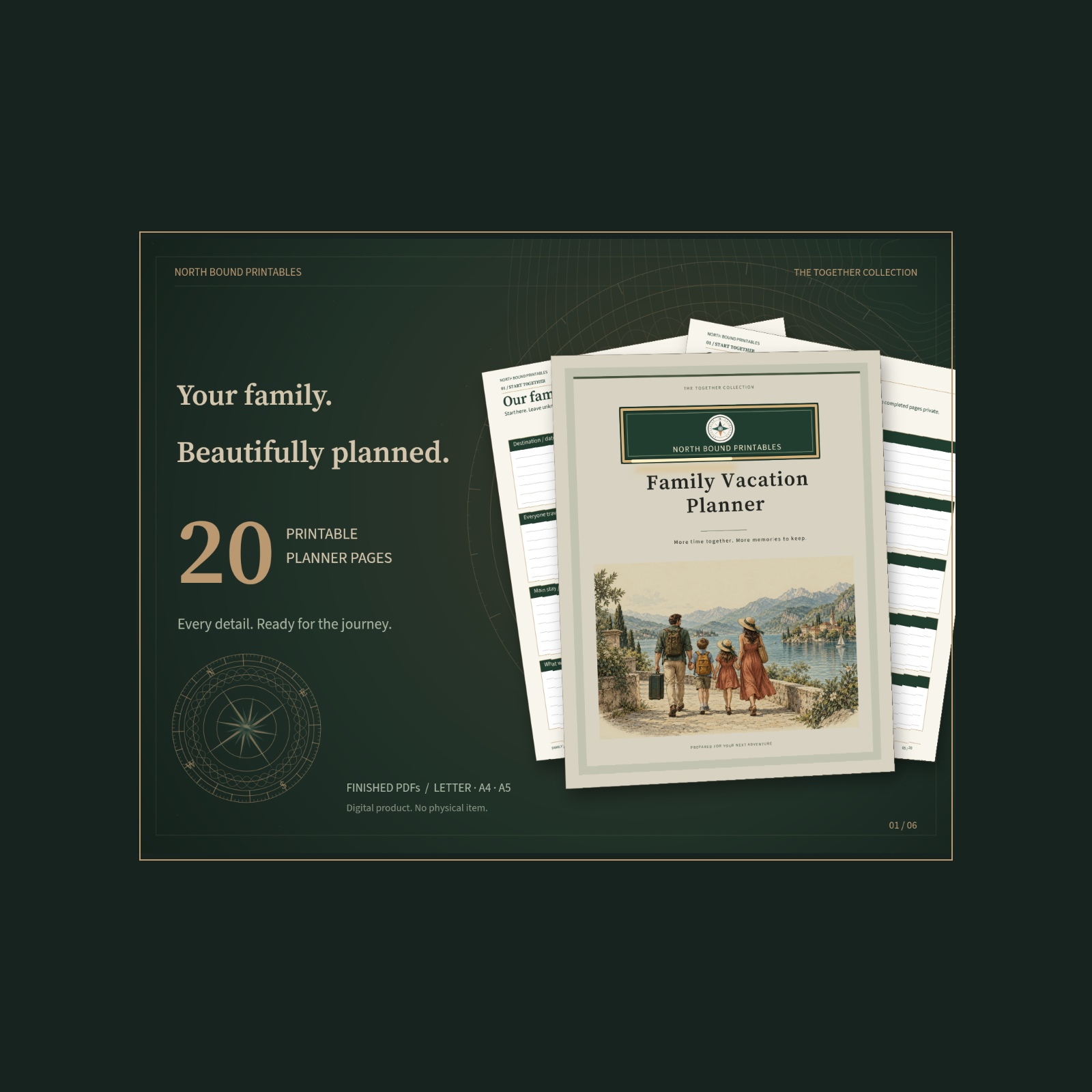
Family Vacation Planner - Illustrated Edition
Plan a family vacation with 20 printable pages for your itinerary, budget, bookings and shared packing. US Letter, A4 and A5 PDFs, downloaded through Etsy.
Family & Kids
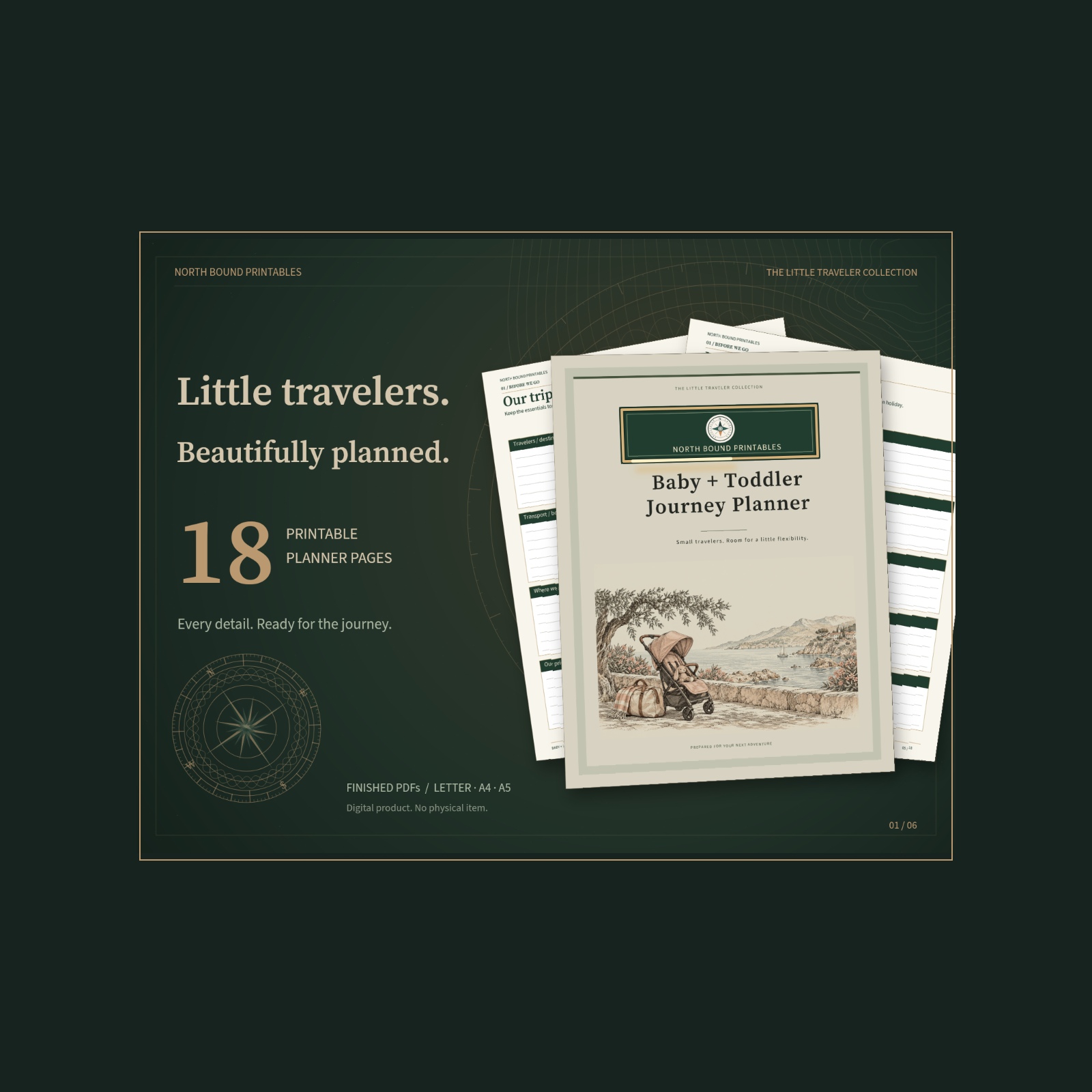
Baby + Toddler Journey Planner
18 printable pages for little travelers, with flexible trip plans, confirmed arrangements and prefilled packing sheets.
Family & Kids
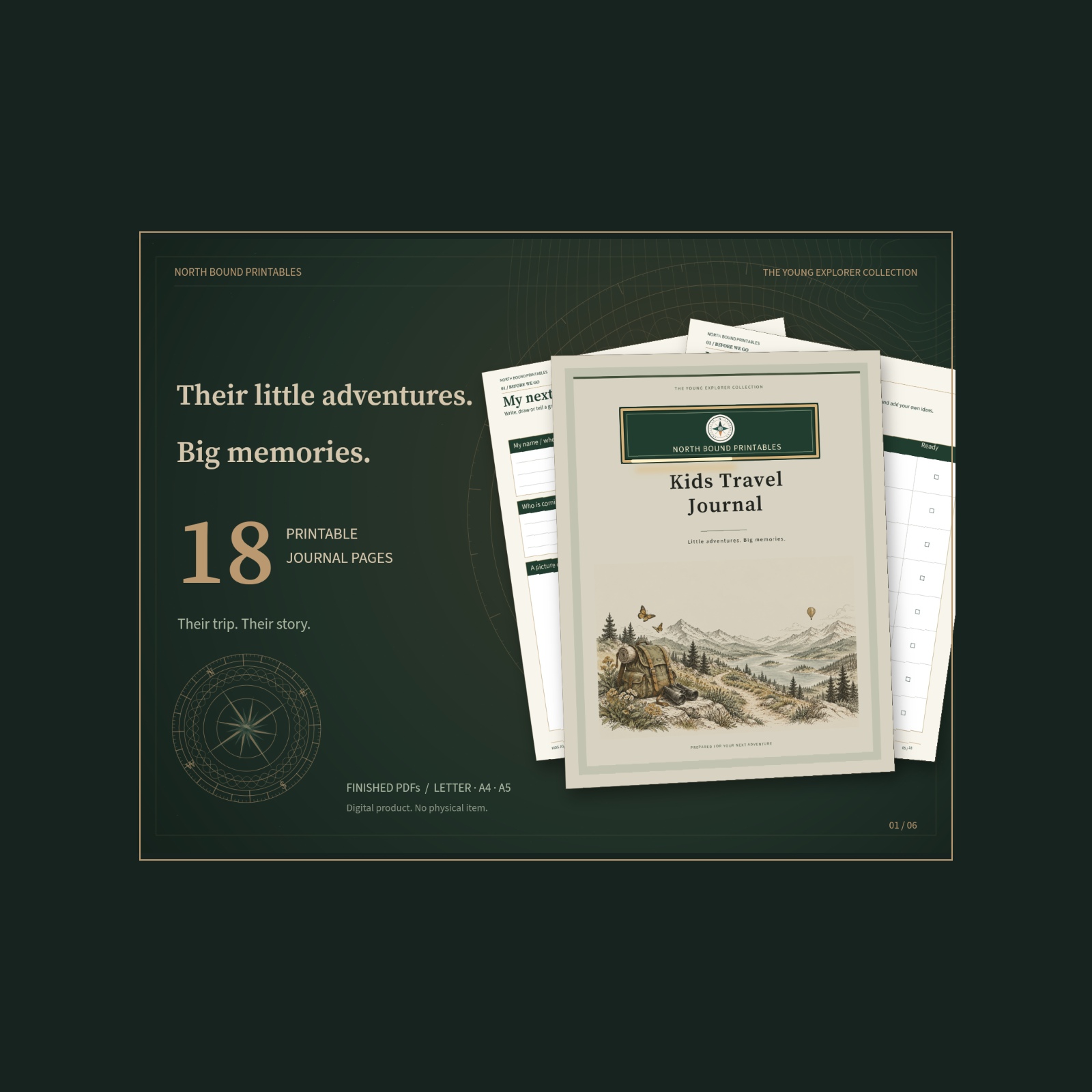
Kids Travel Journal - Illustrated Edition
18 printable pages for drawing, writing and keeping little vacation memories.