
Road trip planning guide
How to plan a road trip itinerary with realistic driving days
Turn a road trip route into a practical day-by-day itinerary with driving time, breaks, overnight stops and a simple fuel budget worksheet.
Anchor the route with your overnight stops
Start with the departure point, destination and number of nights available. Mark any fixed reservations before adding scenic detours. For each overnight stop, record the full address, check-in window, booking reference and a contact number. A town name alone is not enough when you are trying to find the property after a long drive.
Compare two possible routes when there is a meaningful choice: the shorter route and the one with the stops you actually want. Put distances, expected driving times, tolls and overnight costs beside each other. The right route is the one that fits your trip, not necessarily the one with the fewest miles.
Separate driving time from the whole travel day
A map's driving estimate does not represent every minute between leaving one stay and arriving at the next. Add meal stops, rest breaks, charging or fuel stops, activities and an allowance for delays to make a usable schedule.
For example, three hours of mapped driving, one hour of planned stops and a thirty-minute allowance make a four-and-a-half-hour journey. Record the intended departure and arrival times beside that calculation. This is a scheduling example, not a recommendation for how long anyone should drive without a break.
- Mapped driving time
- Planned stops and their duration
- Extra time for uncertainty
- Expected arrival and check-in window
- A shorter alternative if plans change
Estimate fuel separately from the rest of the budget
For miles and miles-per-gallon, divide the route distance by the vehicle's estimated fuel economy, then multiply the gallons by your assumed price per gallon. Keep the units consistent. With kilometers and liters per 100 kilometers, multiply distance by consumption and divide by 100 before applying a price per liter.
Write down the assumptions and date you checked the price. Treat the result as an estimate, not a promise. Add accommodation, food, parking, tolls and activities separately. For an electric vehicle, use a compatible route-planning tool and confirm charging options with the operator; a fuel formula is not a battery-range model.
Keep the working plan short and usable
Carry a route overview and the details for the current day where they are easy to find. Keep optional stops on a separate wishlist, so it is clear which plans can be skipped. Download any information you need offline before leaving areas with reliable reception.
Before departure, check current road and weather conditions through official sources and confirm reservations with the providers. The printable planner records your decisions; it does not replace live navigation, current restrictions or vehicle guidance. Reprint a daily worksheet when your plans change instead of trying to squeeze a second itinerary into the margins.
Put the guide into practice
Related printable planners
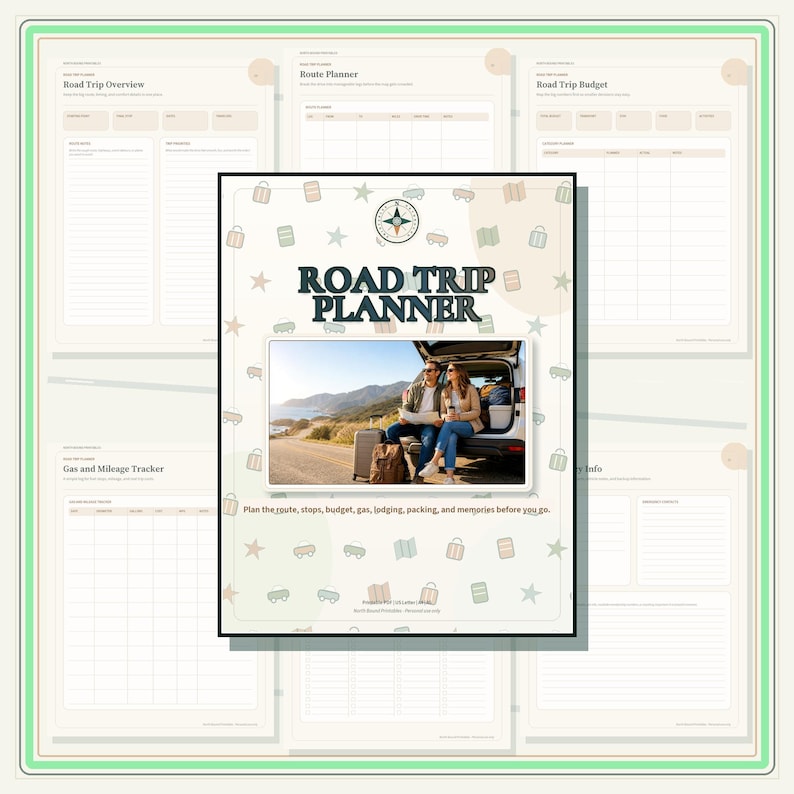
Road Trips
Road Trip Planner
Route legs, gas and mileage, lodging and daily drive logs across 18 pages.
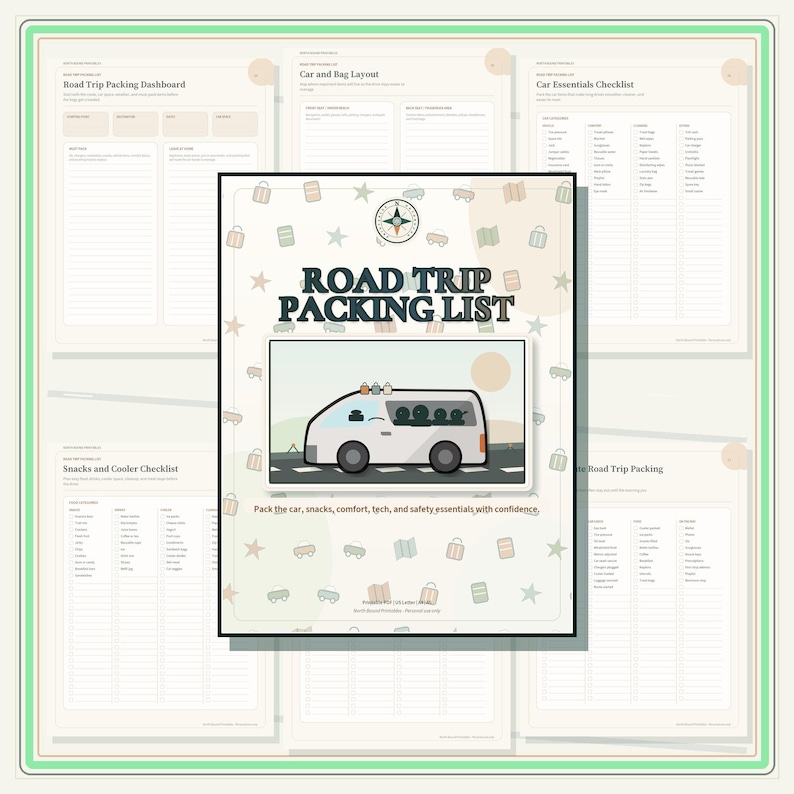
Packing Lists
Road Trip Packing Checklist
Car trip essentials, snacks and an emergency kit, all checked off.